

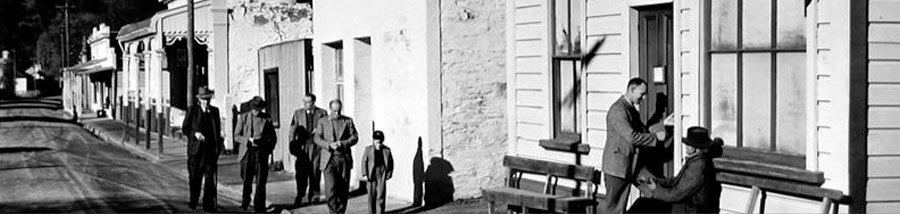
For Students - Everyday life on the goldfields
These are just little snippets to introduce what everyday life was like on the goldfields.
Women
Women began arriving on the goldfields shortly after the gold rush. Some came with their husbands, some followed the gold and others came to work in some of the new businesses. The isolation of the area meant that life was far from easy for women and they had to work very hard.
'I've seen me getting up at four o'clock in the morning and going to bed at eleven o'clock at night and that went on f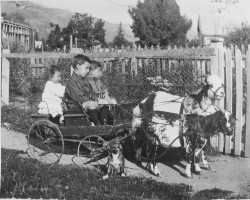 or years. ... I could drive six horses in a wagon and I could ride a horse. I could fence ... I did gardening and I planted potatoes. I did everything on the farm that was necessary; in fact, I done too much.'
Mrs. Ellen Dennison, 1877 - 1964
'Life was very hard for women on the goldfields in the early days. They had large families and had to learn how to care for them with a minimum of medical assistance. Only when an accident occurred or in serious illness was a doctor called in, for doctors' or chemists' accounts were hard to meet.'
Mrs. Sarah Salmond, 1864 - 1956
Education
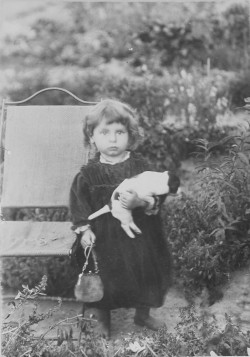
Josephine Trail grew up in Arrowtown. She describes what it was like to go to school in the 1880s.
'The first day I was terror - stricken when a Standard Six boy was strapped; three cuts on each hand for having six spelling errors. I had learned a valuable lesson. I must try my hardest or else. After the snow came the terrible frosts and chilblains swelled our fingers and toes. It was agony trying to write on cold slates with hard slate pencils with fingers cracked and bleeding from burst chilblains.'
- There were 16 schools around the Wakatipu district in the late 1800s, today there are seven. Brainstorm all the reasons you can think of as to why there were so many schools?
- Many children had to walk several miles to get to school - if they went at all.
- Because some families needed children to work for them, absenteeism from school was a big problem. Can you create a list of all the chores children might need to help their parents with?
Law and Order
'Gold, Gold, Gold
bright and yellow, hard and cold,
Heavy to get and light to hold
Stolen, borrowed, squandered, doled
Price of many a crime untold'
Charles Thatcher, goldfield balladeer
At the start of the rush there were no banks in the Wakatipu. A visiting police inspector was horrified to discover 'upwards of £100,000 of gold lay in saddlebags on the floor of a small calico tent guarded by only a police orderly who did the cooking'.
The Gold Escort took gold from the Central Otago goldfields to Dunedin. In 1863 the job went to Cobb and Co coaches who offered a passenger and freight service to and from the fields. Armed police would accompany the coach to ensure the gold got to Dunedin safely. Make sure you check out the Gold Escort safe at the Museum.
You might be lucky enough to visit the Arrowtown Gaol when you come to the Museum. Wouldn't it be fun to complete some creative writing about what it would be like to stay OVERNIGHT in the gaol!
Weather
Central Otago is a place of weather extremes. Fuel for fires was scarce and speargrass and matagouri had to be burnt instead. Coal was rationed in Arrowtown and was sold by the bucketful at the start of the goldrush.
'The winter? Oh, it was terrible. The river was frozen over from side to side. The washing hung on the line for about a week. It would be frozen stiff.'
The first winter after the miners arrived, there was a late snowfall and then heavy rain. Flooding occurred which caused havoc all around Central Otago and Arrowtown.
- James Kelly, aged 26, drowned
- Pat Travers, aged 22, drowned
- Patrick Murnin, aged 25, buried in landslide
- John McGunny, aged 20, drowned
- Robert Ware, aged 30, drowned
Charles Wilkinson...
Living Conditions
'All the houses are built of calico on poles. There is not a single sod or stone building to be seen. Such is the Arrow township of today.'
Look at the photographs in the gallery of Arrowtown and Queenstown’s early buildings (both European and Chinese). Ask yourselves the following questions:
- What materials were used?
- Why?
- Do you recognise any patterns?
- What are they?
- What other questions can you ask?